Research
20 articles
- Trading
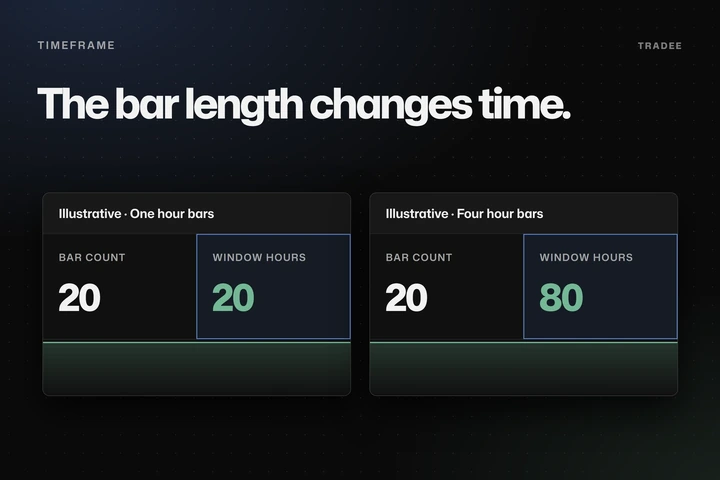
A timeframe change is a new test
A 20-bar rule on the 1 hour chart looks at 20 hours. The same 20 bars on the 4 hour chart look at 80 hours. That second run is a different experiment.
- Markets
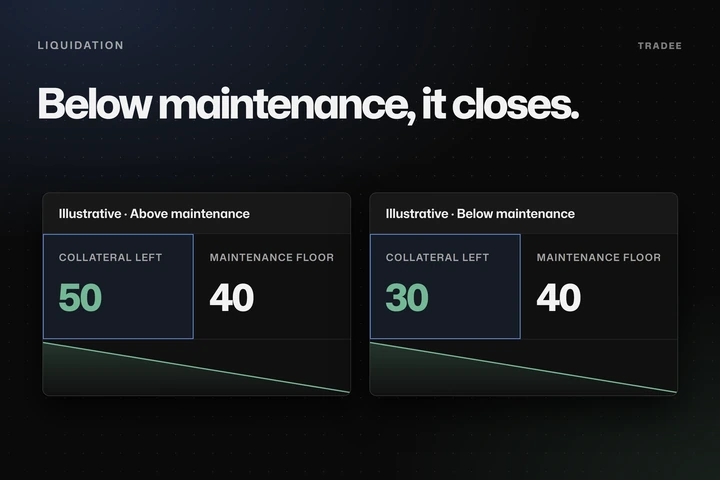
What liquidation means on a perpetual
A perpetual is liquidated when mark-price collateral falls below maintenance margin. The last trade on the contract is not the price that closes it out.
- Product
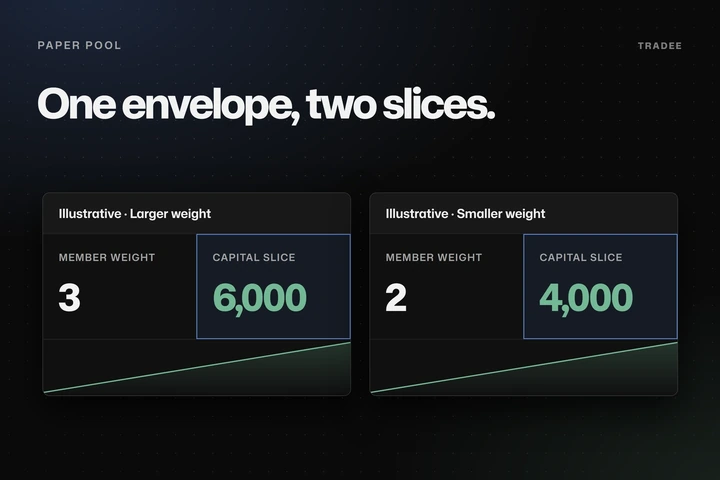
What a paper pool shares
A paper pool is one modeled envelope that member executions split by weight. It is not a broker demo account, and the slice is not an exchange wallet.
- Trading
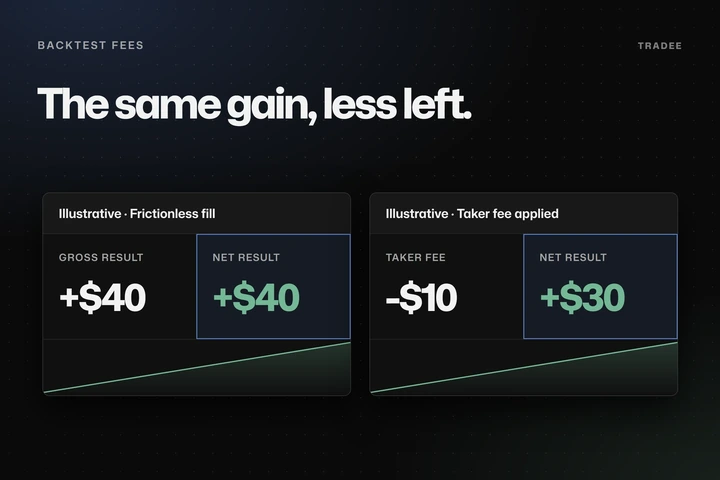
What fees do to a backtest
A futures fee is a percent of notional on each fill. A 10,000 notional round trip at 0.05 percent taker costs 10, and that cost can erase a 40 point gain.
- Trading
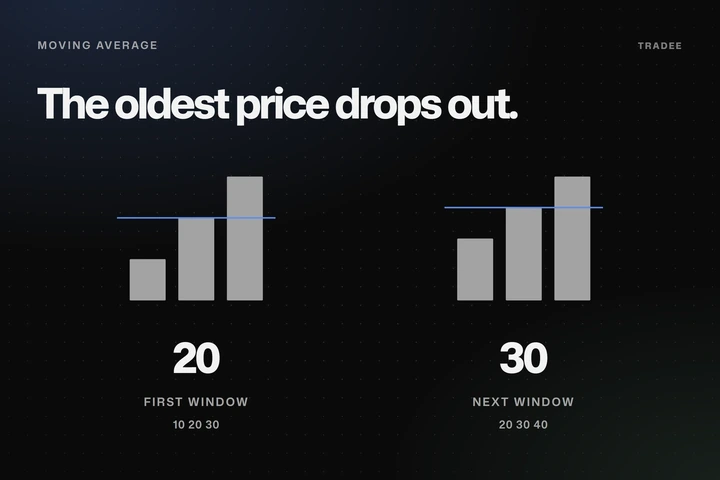
What a moving average shows
A moving average is the mean of the last N prices. When a new price arrives, the oldest price drops out of the window and the average is calculated again.
- Trading
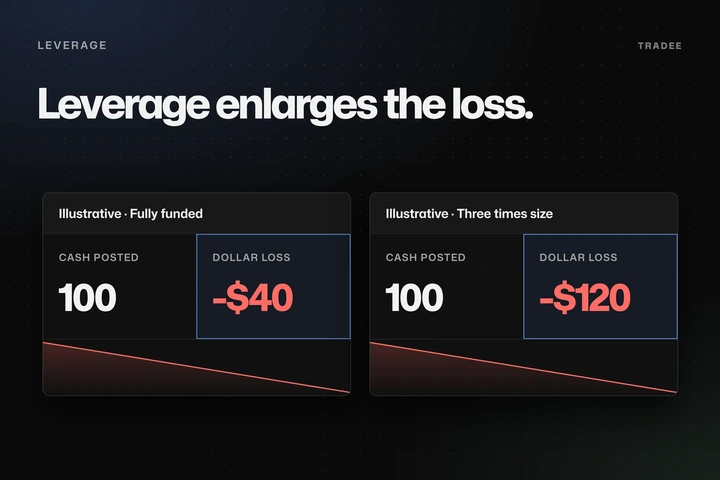
What leverage means in trading
Leverage lets a smaller deposit control a larger position. The same price move then changes the deposit by more, and the loss can exceed the deposit itself.
- Trading
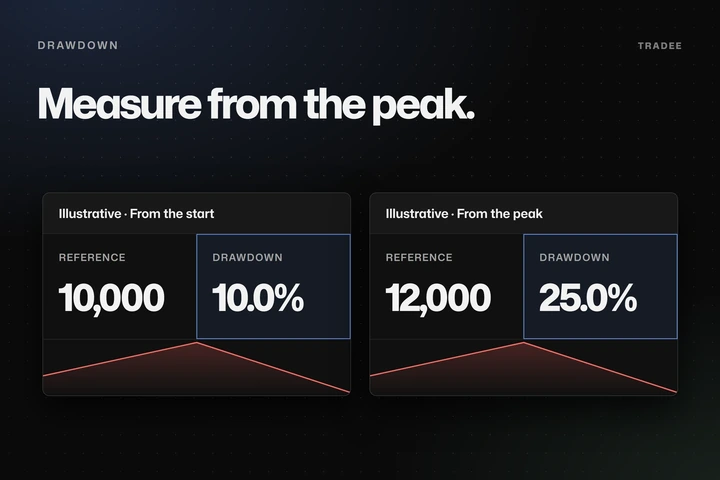
What equity drawdown means
Equity drawdown is the fall from a peak in account equity to a later low, divided by that peak. A later recovery does not erase the fall that already happened.
- Trading
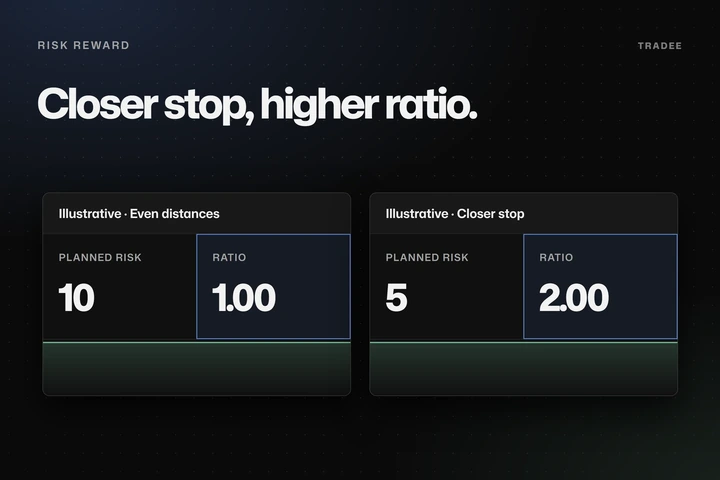
What a risk to reward ratio means
A risk to reward ratio divides the planned gain by the planned loss. For example, a profit target 10 points away and a stop 5 points away is a ratio of 2.
- Trading
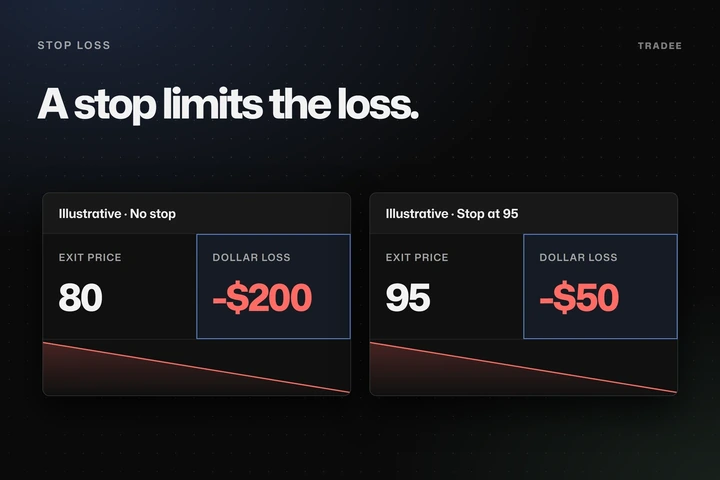
What a stop loss does
A stop loss names the price that should close a position. On a stock order, that price triggers a market order, so the actual fill can differ from the stop.
- Trading
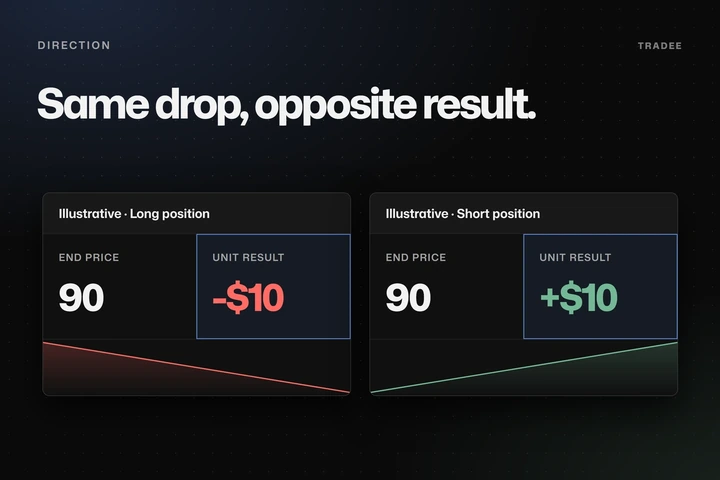
What long and short mean in trading
A long position gains when the price rises and loses when it falls. A short position does the opposite, so one price move produces two opposite results.
- Trading
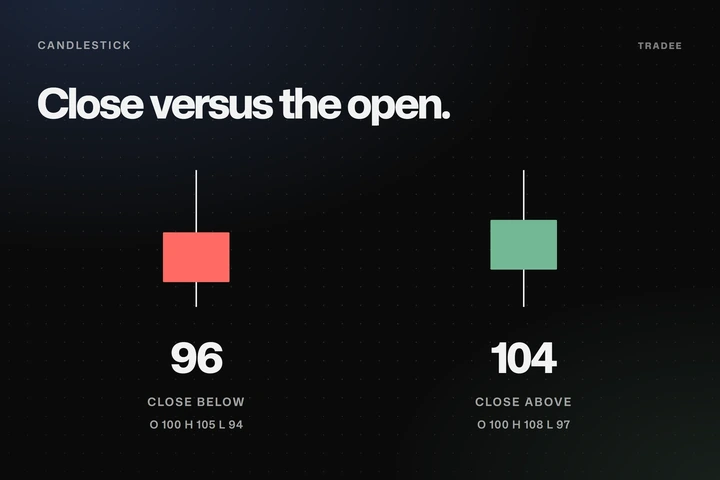
What a candlestick shows
A candlestick records the open, high, low, and close for one interval. The body is the open-to-close move, and the wicks mark prices outside that body.
- Markets
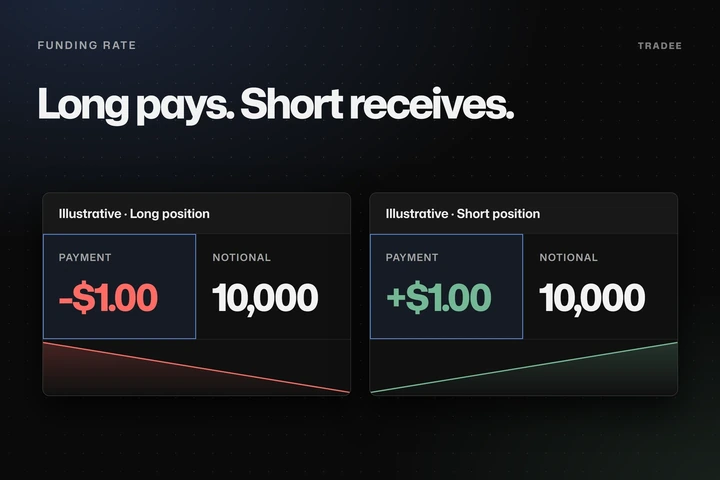
Who pays perpetual funding, and how often
Perpetual funding is not a daily fee. Binance often settles every 8 hours, and some contracts move to every 4 hours or every 1 hour. Only an open position pays.
- Trading
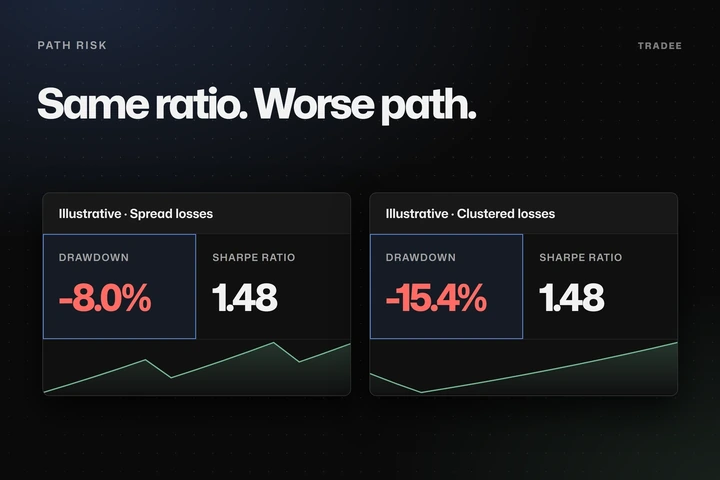
What the Sharpe ratio hides
The Sharpe ratio divides average excess return by its variability. Two paths can share the ratio and the ending value while one drawdown is much deeper.
- Trading
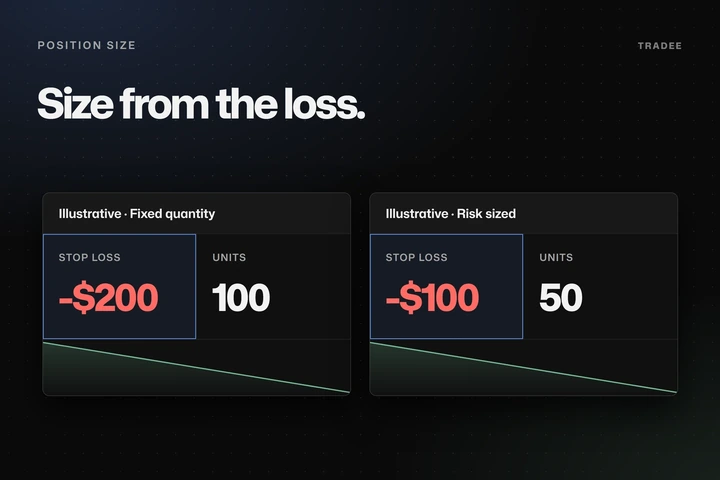
Size the loss before the trade
Choose the dollar loss and the stop distance first. Position size is that loss divided by the distance, so a fixed quantity can lose a different amount.
- Trading
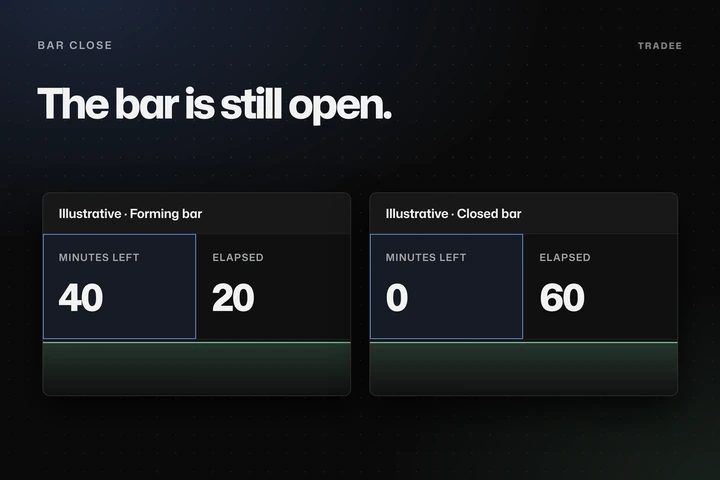
A forming candle is not a closed candle
A forming candle is still changing. Its high, low, and close are final only after the interval ends. Using the eventual close early is look-ahead bias.
- Trading
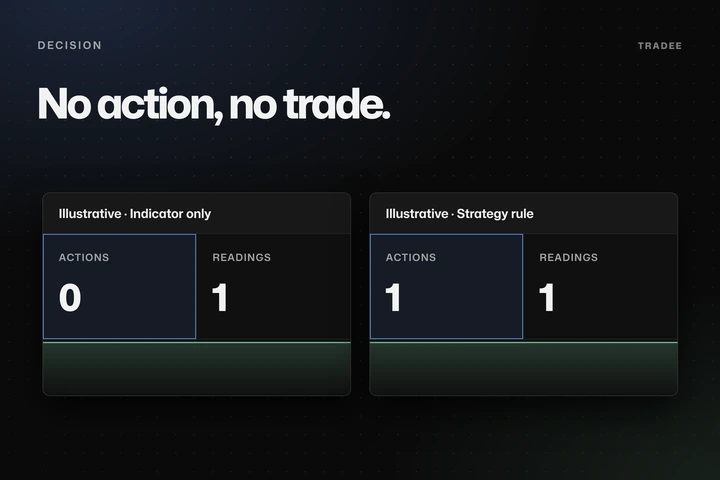
An indicator is not a strategy
An indicator turns price into a number. A strategy is the rule that decides what to do with that number, including the entry, the exit, and the stop loss.
- Product
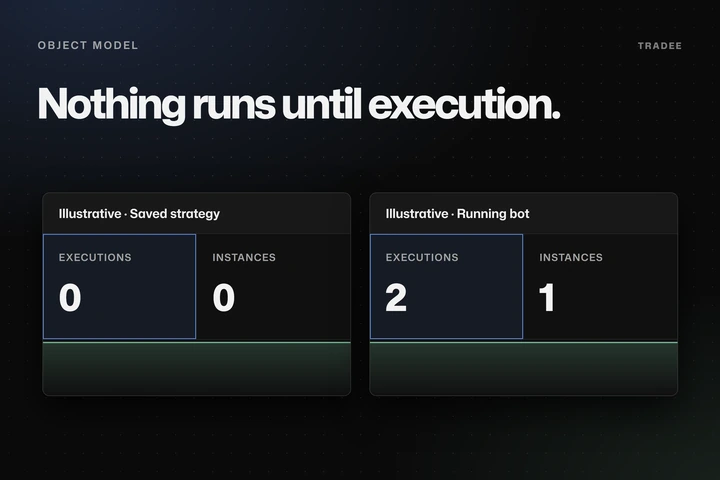
Strategy, bot, and execution
In Tradee, a strategy is a saved rule, a bot binds that rule to instruments, and an execution is one run of the bot with its own mode and modeled funding.
- Trading

What is automated trading?
Automated trading uses software rules to make trading decisions. Signal generation, routing, execution, and custody are separate parts of the full system.
- Trading

Paper trading vs backtesting: what each proves
Backtesting tests rules on historical data. Paper trading tests a fixed process as new data arrives. Use both, in that order, for different kinds of evidence.
- Trading

Why win rate is not enough
Win rate counts profitable trades, but ignores payoff size and sample uncertainty. Compare it with breakeven win rate, expectancy, costs, and drawdown.