Backtesting
7 articles
- Trading
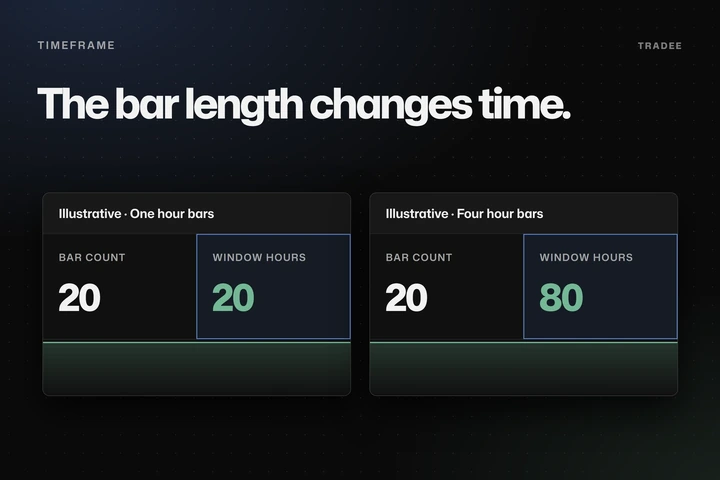
A timeframe change is a new test
A 20-bar rule on the 1 hour chart looks at 20 hours. The same 20 bars on the 4 hour chart look at 80 hours. That second run is a different experiment.
- Trading
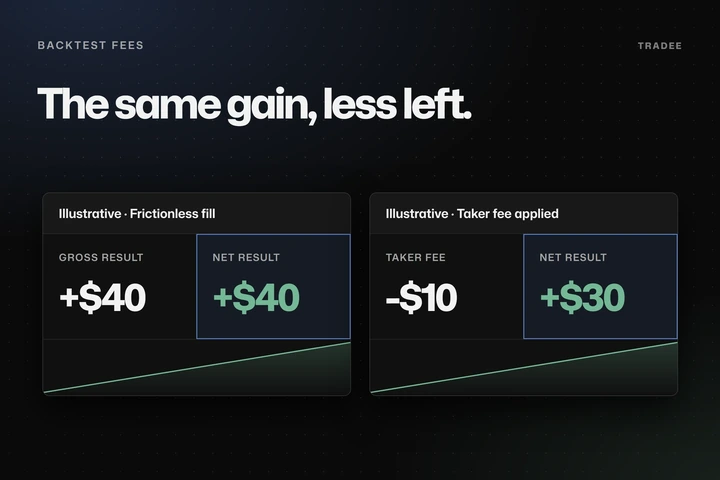
What fees do to a backtest
A futures fee is a percent of notional on each fill. A 10,000 notional round trip at 0.05 percent taker costs 10, and that cost can erase a 40 point gain.
- Trading
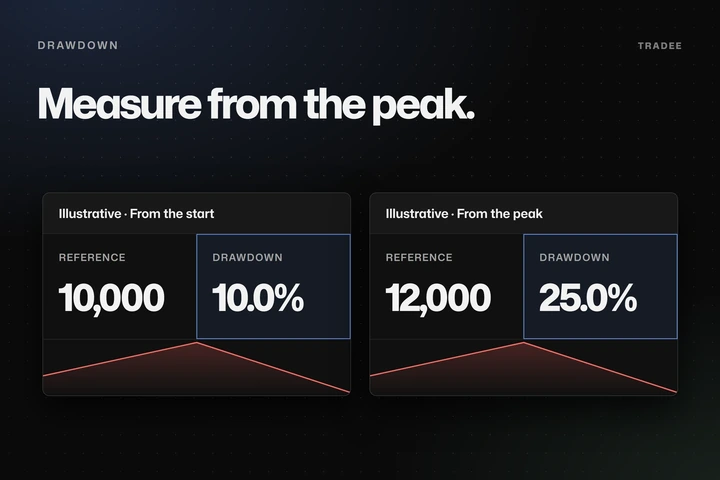
What equity drawdown means
Equity drawdown is the fall from a peak in account equity to a later low, divided by that peak. A later recovery does not erase the fall that already happened.
- Trading
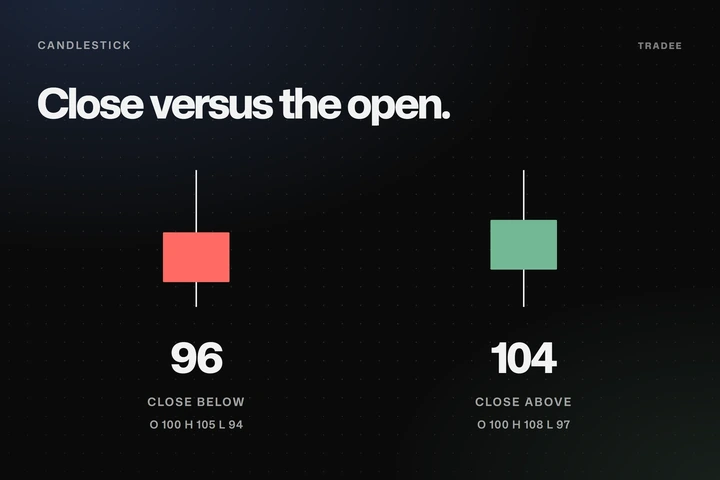
What a candlestick shows
A candlestick records the open, high, low, and close for one interval. The body is the open-to-close move, and the wicks mark prices outside that body.
- Trading
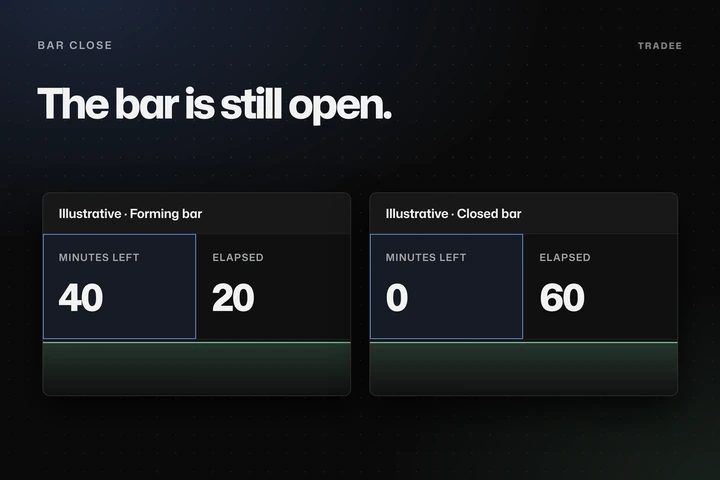
A forming candle is not a closed candle
A forming candle is still changing. Its high, low, and close are final only after the interval ends. Using the eventual close early is look-ahead bias.
- Trading

Paper trading vs backtesting: what each proves
Backtesting tests rules on historical data. Paper trading tests a fixed process as new data arrives. Use both, in that order, for different kinds of evidence.
- Trading

Why win rate is not enough
Win rate counts profitable trades, but ignores payoff size and sample uncertainty. Compare it with breakeven win rate, expectancy, costs, and drawdown.