Risk management
9 articles
- Markets
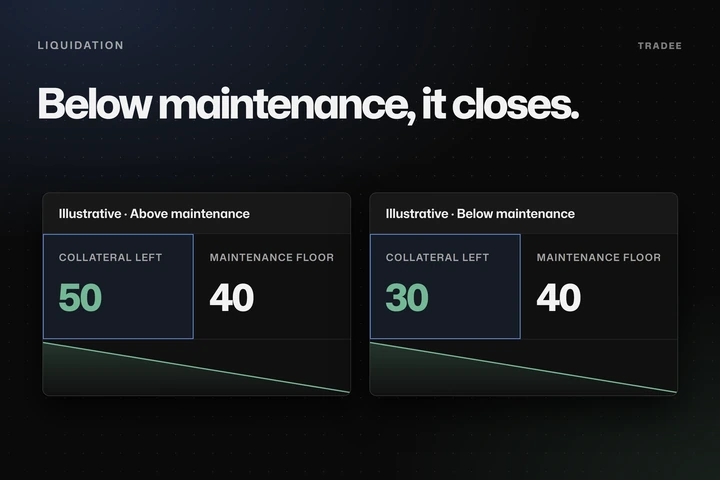
What liquidation means on a perpetual
A perpetual is liquidated when mark-price collateral falls below maintenance margin. The last trade on the contract is not the price that closes it out.
- Trading
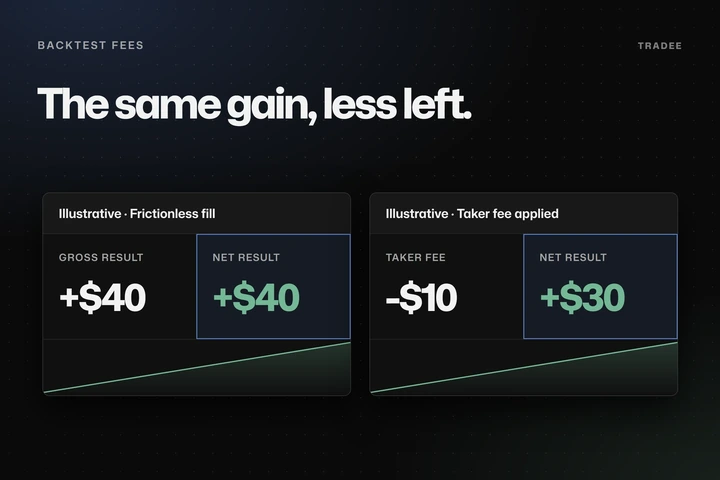
What fees do to a backtest
A futures fee is a percent of notional on each fill. A 10,000 notional round trip at 0.05 percent taker costs 10, and that cost can erase a 40 point gain.
- Trading
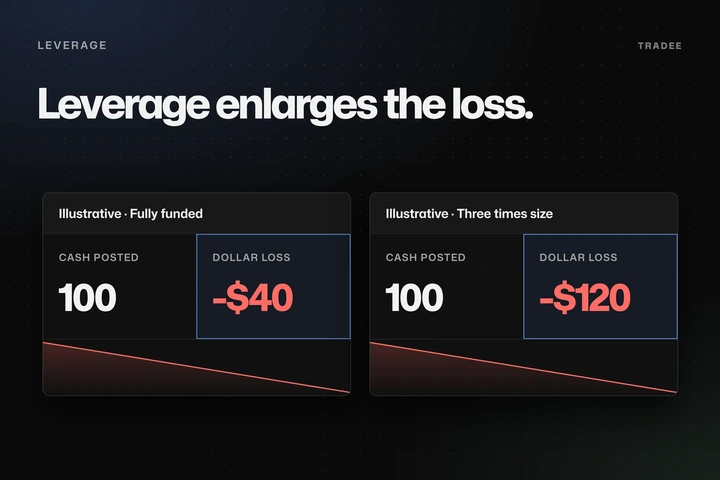
What leverage means in trading
Leverage lets a smaller deposit control a larger position. The same price move then changes the deposit by more, and the loss can exceed the deposit itself.
- Trading
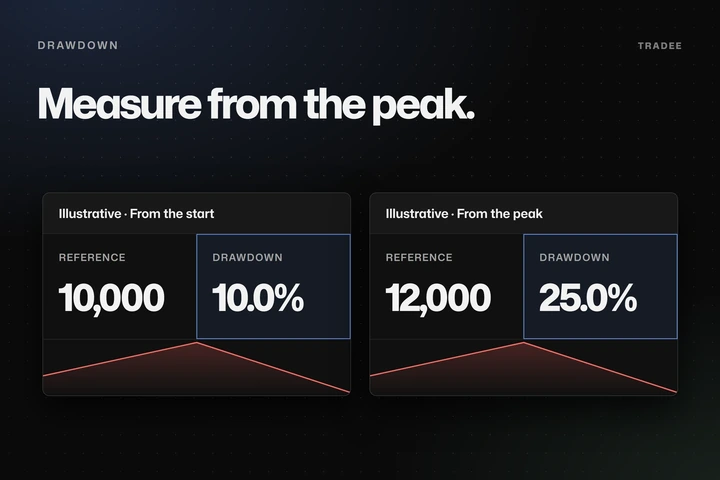
What equity drawdown means
Equity drawdown is the fall from a peak in account equity to a later low, divided by that peak. A later recovery does not erase the fall that already happened.
- Trading
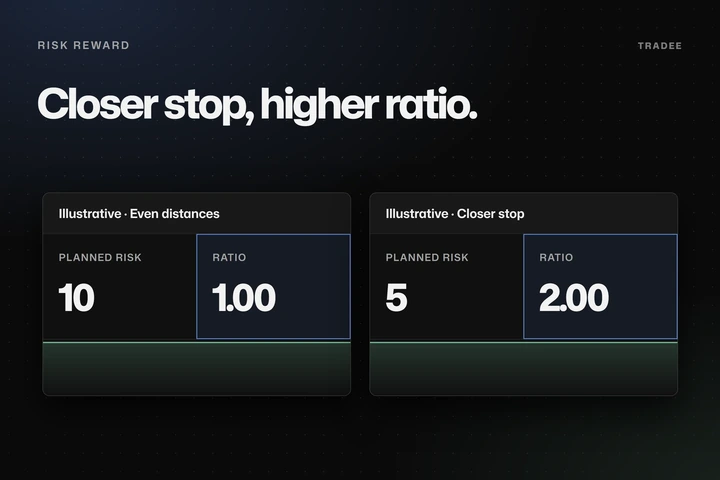
What a risk to reward ratio means
A risk to reward ratio divides the planned gain by the planned loss. For example, a profit target 10 points away and a stop 5 points away is a ratio of 2.
- Trading
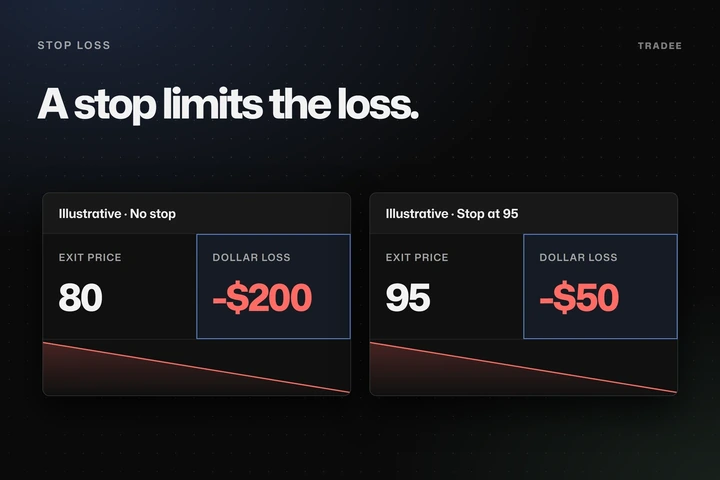
What a stop loss does
A stop loss names the price that should close a position. On a stock order, that price triggers a market order, so the actual fill can differ from the stop.
- Trading
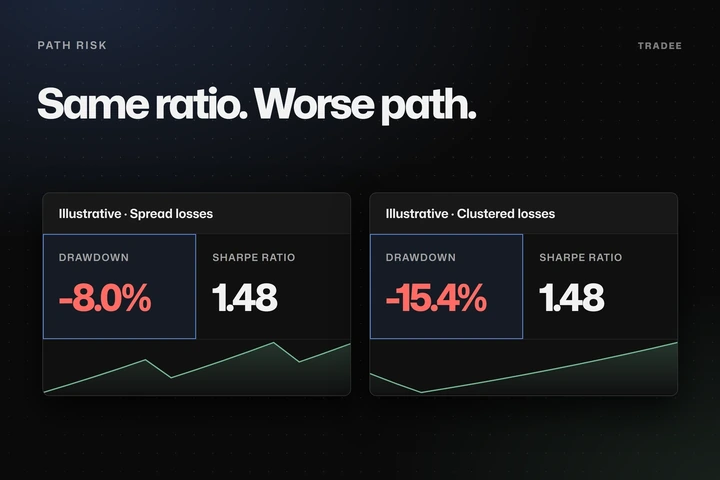
What the Sharpe ratio hides
The Sharpe ratio divides average excess return by its variability. Two paths can share the ratio and the ending value while one drawdown is much deeper.
- Trading
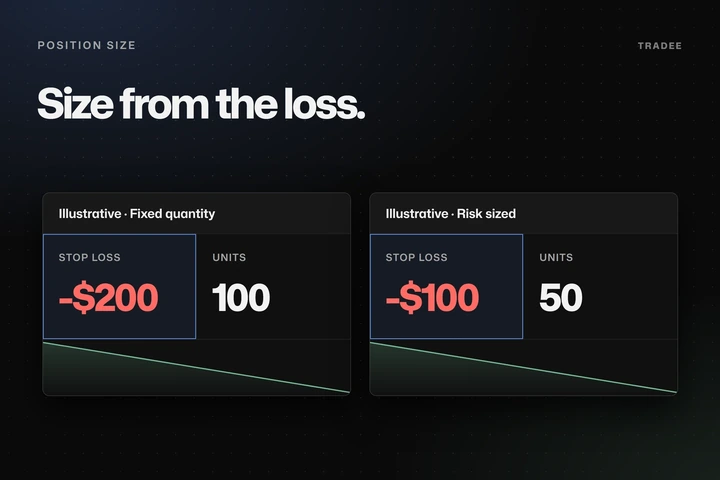
Size the loss before the trade
Choose the dollar loss and the stop distance first. Position size is that loss divided by the distance, so a fixed quantity can lose a different amount.
- Trading

Why win rate is not enough
Win rate counts profitable trades, but ignores payoff size and sample uncertainty. Compare it with breakeven win rate, expectancy, costs, and drawdown.